Ogawa Rope Treatment
This page is here to help our members understand what Ogawa rope is,
what JBO is, and how different people choose to treat and care for
their ropes. It is not a set of rules, and it is not a guarantee of
safety – your rope, your method, and your responsibility.
What Is Ogawa Rope?
Ogawa is a well-known Japanese manufacturer of natural
fibre rope, widely used in rope communities around the world. Ogawa’s
jute is valued for:
- its consistent diameter and twist,
- its relatively low fuzz once broken in,
- its balance of firmness and flexibility,
- and its long-term durability when cared for properly.
Ogawa rope is shipped in a fairly “raw” state: it can feel stiff,
abrasive, and has a characteristic petroleum-like smell. This is
because of the way jute is processed before it is spun into rope.
What Is JBO (Jute Batching Oil)?
During manufacturing, jute fibres are typically treated with
jute batching oil (JBO), a mineral-oil based mixture
used to:
- soften the raw fibres,
- reduce dust and breakage during spinning,
- and help the fibres run smoothly through the machinery.
JBO is standard in the jute industry. However, some people:
- dislike the smell,
- experience mild skin irritation,
- or are concerned about unknown long-term exposure.
It is important to understand that:
no home treatment can completely “remove” JBO from rope.
What we can do is:
- reduce surface JBO, dust, and odour,
- minimise how much transfers to skin,
- and seal the fibres with more skin-friendly oils and waxes.
Rope Treatment Methods People Use
There is no single “correct” way to prepare rope. Different riggers and
rope makers use different methods depending on their priorities:
comfort, smell, longevity, or simplicity. Below is a summary of common
techniques you’ll see recommended.
Airing (Hanging Rope to Breathe)
Simply hanging new rope in a well-ventilated space for a few days to
let the strongest smells dissipate.
Pros
- Very gentle – no structural impact on the rope.
- Reduces the strongest JBO smell over time.
- Zero equipment needed.
Cons
- Slow – may take days or weeks to make a noticeable difference.
- Does not “remove” JBO, only lets volatiles off-gas.
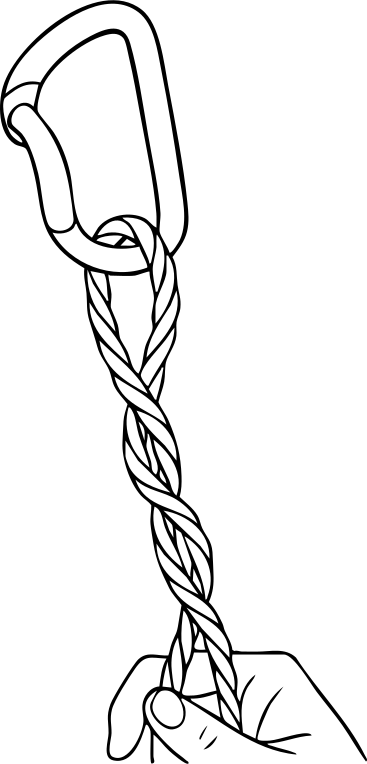
Mechanical Breaking / Polishing
Running the rope under tension through a smooth guide (for example a
rounded carabiner or around itself), to break the hardest fibres,
remove loose fuzz, and soften the overall feel.
Pros
- Makes rope more supple and pleasant to handle.
- Removes a lot of surface dust and fibre debris.
- Can slightly reduce surface JBO and smell.
Cons
- Generates a lot of dust – needs good ventilation or a mask.
- Too many passes will weaken the rope fibres.
- Easy to overdo if you chase extreme softness.
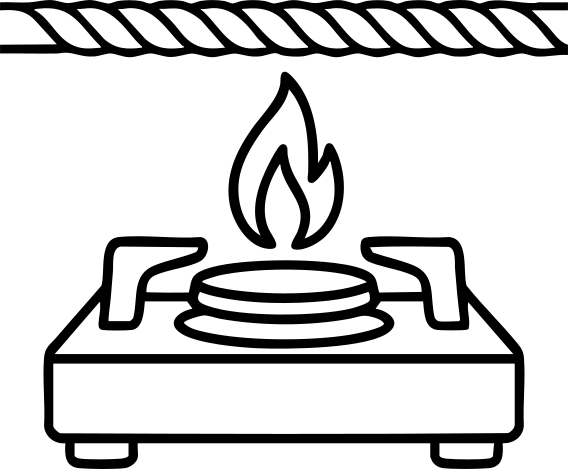
Singeing (Burning Off Fuzz)
Quickly passing the rope through the tip of a blue flame to burn off
surface fibres, then wiping off soot with a cloth.
Pros
- Removes fuzz and makes the rope feel smoother on skin.
- Reduces micro-abrasion and itchiness.
- Works well in combination with light oiling.
Cons
- Requires care – pausing too long in the flame can scorch fibres.
- Multiple heavy singeings can darken and weaken rope over time.
- Produces soot that needs to be wiped off.
Wet Treatment & Boiling
Soaking or boiling rope in water (sometimes with soap), then drying
under tension to remove chemicals and soften fibres.
Pros
- Can remove some dirt and some surface manufacturing residues.
- Can make very stiff rope noticeably softer.
Cons
- Weakens the rope structure by stripping natural oils.
- Requires careful drying under tension or rope becomes kinked.
- Can make rope too floppy or “mushy” for certain styles of tying.
- Not recommended for Ogawa if you want to preserve its character.
Heating, Baking & Tumble Dryer Methods
Using an oven or tumble dryer (sometimes with baking soda, sometimes
in a canvas bag) to heat rope and volatilise oils.
Pros
- Can reduce JBO smell and remove some loose surface oil.
- Softens rope slightly and breaks in fibres mechanically.
Cons
- Risk of overheating and damaging fibres.
- Fumes from heating JBO can be unpleasant or unsafe.
- Can dry rope excessively and make it more brittle.
- Messy – baking soda and dust inside your dryer or oven.
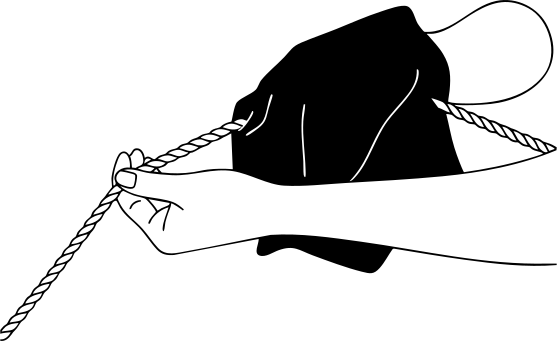
Oiling & Waxing
Applying a small amount of oil (such as camellia or jojoba) and
optionally beeswax to seal the fibres, reduce friction, and improve
handling.
Pros
- Makes rope feel smoother and kinder on skin.
- Helps repel moisture and slow down mould and bacteria.
- Creates a barrier between skin and any remaining surface JBO.
- Improves longevity when used sparingly and maintained over time.
Cons
- Too much oil can leave rope greasy and attract dirt.
- Heavy waxing can make rope overly stiff or “waxy” to the touch.
- Over-oiling or repeated re-oiling without restraint can hide
damage and over-soften rope.
Sunlight & Freezing
Leaving rope in direct sunlight or in a freezer, usually as an
attempt to freshen and reduce microbial growth.
Pros
- May help reduce some surface germs and odours.
- Dry method – no shrinkage from soaking.
Cons
- Sun can dry rope out and weaken fibres if overused.
- Freezing is not a substitute for cleaning or inspection.
- Does little to remove JBO itself.
Oz's Preferred Approach
Based on the balance between comfort, smell, longevity, and structural
integrity, I favour a gentle dry-treatment approach
for Ogawa jute:
-
Airing: Hang new rope in a well-ventilated space for
at least 24–48 hours to let the strongest JBO volatiles dissipate.
-
Light Mechanical Breaking: Run each rope through a
smooth guide (such as a rounded carabiner or around itself) a modest
number of times – enough to remove obvious dust and stiffness, but
not so much that the rope becomes floppy.
-
Gentle Singeing: Pass the rope quickly through the
tip of a blue flame to burn off fuzz, and then wipe away soot with a
cloth.
-
Wipe Down: Use a dry cloth to remove remaining dust,
soot, and surface residue along the full length of the rope.
-
Light Oiling: Apply a small amount of camellia or
jojoba oil (or a light beeswax blend) using a cloth, just enough to
give a smooth, dry-to-the-touch finish once absorbed.
-
Rest & Breathe: Hang the ropes for 48–72 hours
to allow the oil to migrate into the fibres and for the surface to
return to a non-greasy feel.
-
Use & Maintain: Let actual tying gently finish
the break-in process. Re-singe and re-oil sparingly when ropes start
to feel hairy or dry.
This method does not claim to remove JBO completely – nothing
practical at home really can – but it:
- reduces surface JBO and dust,
- significantly reduces the smell,
- minimises skin transfer,
- and avoids the more aggressive treatments that can weaken rope.
Choosing Your Own Rope Treatment
Rope treatment is ultimately a matter of personal preference.
Some people like their rope very crisp and “raw”, others prefer a soft,
heavily oiled feel. Some are more concerned about chemicals and will
do more aggressive processing; others are more concerned about
preserving maximum strength.
At Clwb Nawa, we encourage members to:
- research different recipes and techniques,
- experiment carefully on a small number of ropes first,
- and choose the approach that fits their own values and body.
There is no single “approved” method here – but we do ask that you:
treat your rope thoughtfully, understand the trade-offs, and always
err on the side of safety.
Responsibility, Inspection & Safety
Whatever treatment you choose, your rope is your responsibility.
Clwb Nawa cannot inspect, certify, or guarantee the safety of your
equipment for any particular use.
You should:
-
Inspect your ropes regularly for signs of wear:
fraying, flat spots, hard lumps, thinning, discolouration, mildew,
or unusual odours.
-
Retire any rope you do not trust. If in doubt,
downgrade it to practice, floor work, or non-load-bearing uses.
-
Understand that conditioning always weakens rope to some extent.
Softer is not automatically safer.
-
Remember that no rope is “guaranteed safe” for high-load use
such as suspension. Safe load-bearing work requires
appropriate training, risk assessment, and generous safety margins.
By attending our events or using your rope in any context, you accept
that:
- you are responsible for the choice, treatment, and condition of your rope,
- you understand that all rope carries some risk,
- and you will take reasonable steps to keep yourself and others safe.
If you are ever unsure about whether a rope is suitable for a given
use, treat that uncertainty as a reason to step back, seek advice, and
prioritise safety.