Safety
& risk
Rope bondage can be practised safely — but it is not without risk.
As with any physical activity that carries a risk of injury, it is important to be aware of those risks and take steps to mitigate them. This page covers the most common hazards and how to stay safe.
A comprehensive overview of physical and psychological risk in rope bondage, and how to structure your practice around them — from Shibari Study.
Consent & negotiation
Consent in rope bondage is ongoing — not a single agreement made at the start of a session, but something actively maintained throughout. Good negotiation before a scene makes it easier to stay present and responsive during one.
Discussion & Negotiation of a Rope Scene — Shibari Study.
Nerve compression
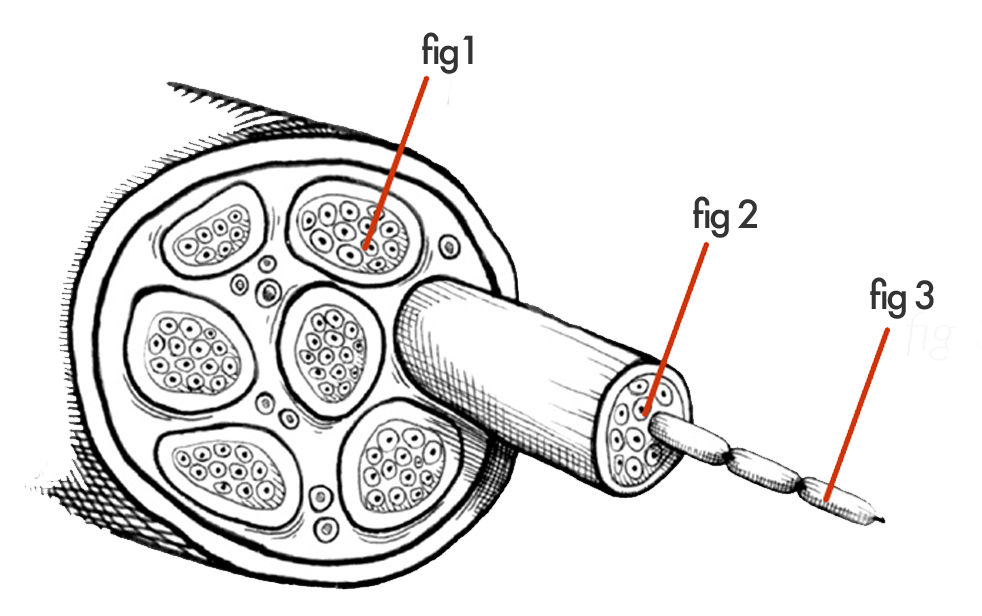
A nerve is made of several motor and sensory fibres (axons) protected by a myelin sheath. Injury can occur due to compression or shearing force on the nerve.
Prolonged compression can cause a lesion of the myelin (neurapraxia), followed by loss of motor and sensory function. Compression can happen without pain or visible warning.
Pay attention to any feelings of tingling, numbness, loss of sensation, or pins and needles. If you or your partner notice something is wrong, untie carefully and calmly — panicking can cause more damage.
Preventing injury
- Maintain consistent, even tension when placing rope — this reduces pressure on the skin (pressure is force over area).
- Place rope correctly — usually over muscle and away from joints, to avoid compressing nerves.
- Be mindful of your partner's position — ropes can slip or move, and lying on wraps or knots creates pressure points.
- Check in regularly — ask your partner to grip your hand, make a tight fist, or extend their thumb to test motor function.
When an injury occurs
Important
Do not massage the affected area. Although this is often the instinctive response, it is strongly discouraged — it could cause further damage.
Rest the affected limb and avoid compressing the area or applying any more rope until full recovery. NSAIDs (such as ibuprofen), vitamin B, and ice or heat may offer some relief, but do not aid recovery.